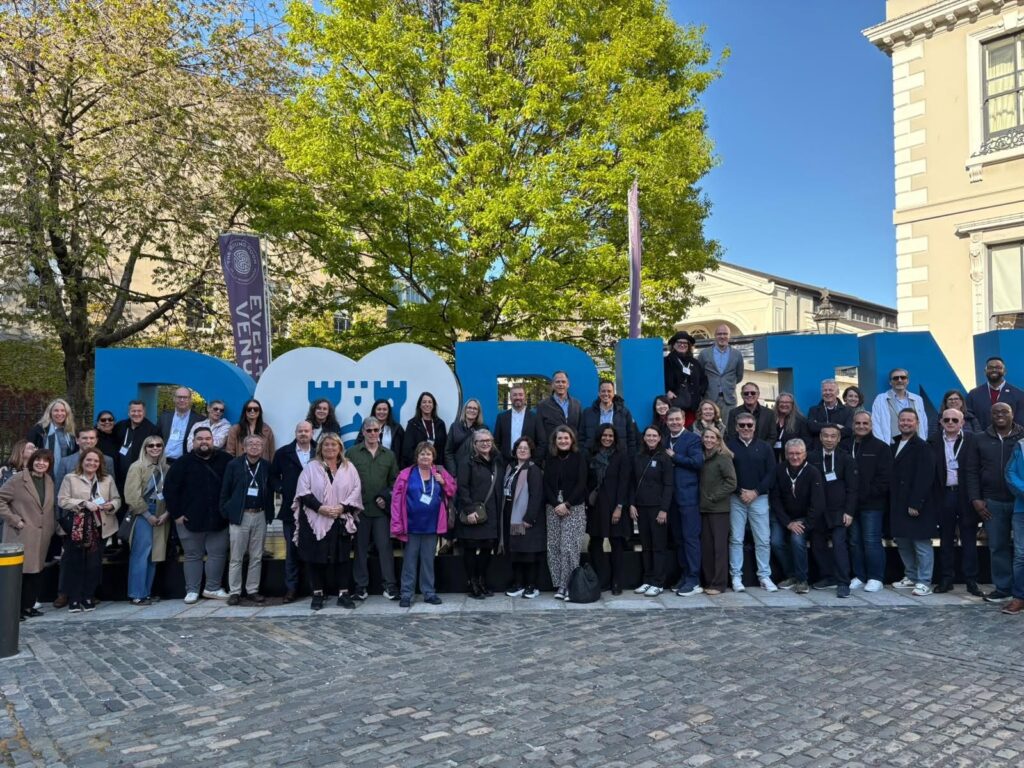
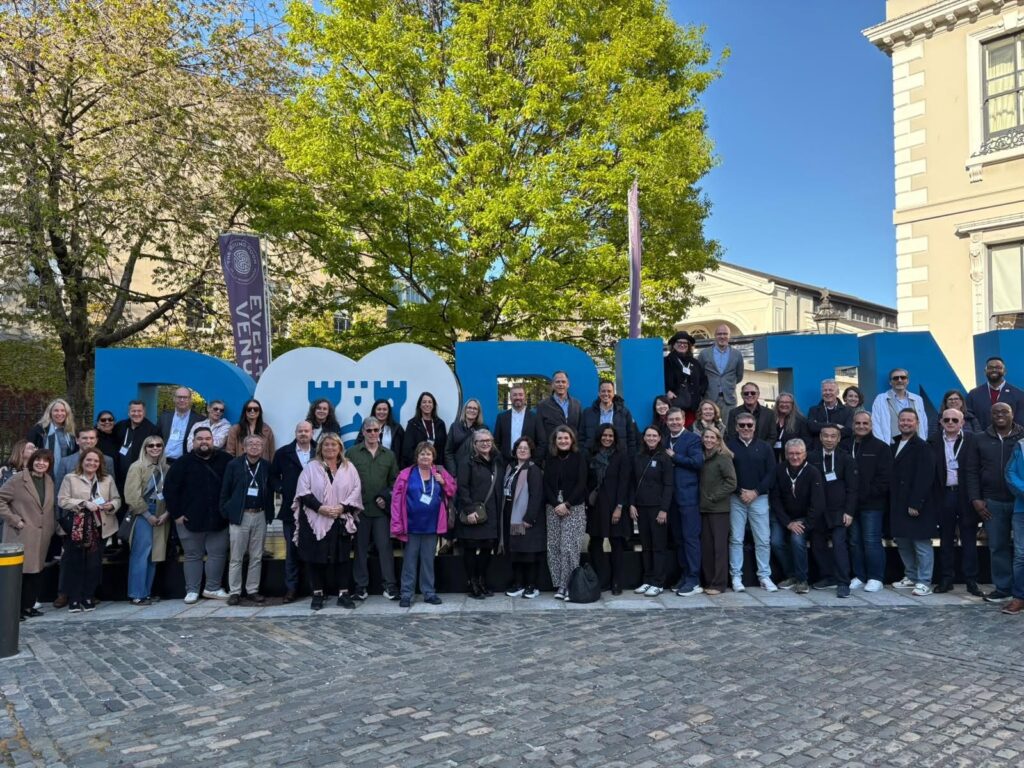
In April I spent a week in Ireland representing Wiri at the IDA World Towns Leadership Summit, alongside site visits to industrial and business precincts in London and Dublin. I was the only New Zealand delegate at the Summit, out of 42 attendees from nine countries. Auckland, and Wiri specifically, hosts the 2027 Summit, and the relationships I built in Dublin and Belfast are already shaping that programme.
I went with one question for everything I saw: does this apply to Wiri, and can we actually do it? A lot of what gets presented at international conferences sounds good in a conference room and falls apart the moment you try to run it in a real industrial precinct. Three places gave us things we can genuinely use.
Dublin: getting Council to listen before the money’s already spent
Dublin Town has been managing the same tension Wiri faces, just at a bigger scale: an industrial base under pressure, a transport system that hasn’t kept up, and a council relationship that can tip into either genuine partnership or one-way lobbying depending on how it’s structured.
What stood out was how deliberately they’ve built their council relationship. Dublin BID representatives were clear that their influence doesn’t come from being the loudest voice in the room. It comes from a formal, quarterly meeting rhythm with council officers that puts precinct priorities on the table before budgets are locked in, not after.
Auckland Council’s engagement with industrial BIDs has been patchy. Transport functions are shifting from Auckland Transport to Council under the Transport Governance Amendment Bill, and that gives us an opening. We should be asking for a formal, recurring seat at the table now, not waiting to be invited to one later.
Dundalk: treating the environment as your own job, not Council’s
Dundalk is a market town of around 40,000 people with none of the institutional backing that bigger centres attract, which made it the most useful comparison of the whole trip. Their BID runs its own environmental programme and treats the state of the precinct as their job, not Council’s. They collect data on what they’re delivering and use it to hold Council to a higher standard.
That’s the thinking behind the Wiri Waste Warrior proposal the Board has already supported in principle. Dundalk backs up the case for doing this in-house rather than through a reactive contractor: it’s not just about turning up more often, it’s the data that comes out of it, and that data is what we use in every conversation with Council afterwards.
Dundalk has also built a shared network with other Irish market town BIDs: joint procurement, shared research costs, one combined voice to national government. Wiri’s relationship with the National Road Carriers Association on truck parking is already a version of this. There’s a case for formalising similar partnerships with other Auckland industrial BIDs on environmental and infrastructure issues, rather than each of us running the same battle alone.
Belfast: staying credible when institutions are under strain
Belfast’s sessions applied most directly to our security work and our advocacy through the Parliamentary Regulations Review Committee. Economic security and physical security are the same issue, and BIDs that treat them separately tend to do worse at both. The phrase that stuck with me was “police service, not a police force”: safety built on coordination and early warning, not just reacting after something’s already gone wrong.
That’s the model Wiri already runs, through our intelligence-led approach with Global Security, our VGRID camera network, and our direct line to Counties Manukau Police. We should be saying so more often and using it in our advocacy on truck parking and the gap in the current bylaw.
Belfast also confirmed something about credibility during institutional change. Precincts that come through a major transition intact are the ones their council treats as a reliable source of ground-level data, not as a complaints line. That’s the shift Wiri needs to make as transport powers move from AT to Council: fewer complaints, more evidence.
Two international precincts worth studying
Alongside the Summit, I visited London Riverside BID and the Sandyford Business District in Dublin, two of the best-run non-retail precincts I’ve come across. London Riverside has a freight charter, an agreed standard between the BID, its major tenants and the local highway authority covering loading zones and access. It’s worth looking at for Wiri while our own bylaw advocacy continues. Sandyford’s Green Charter ties environmental standards to real cost savings for members through shared waste contracts and joint purchasing, above 70% of members are signed up, and not because they care about the environmental credential. They signed up because it saves them money. Sandyford also has a transport agreement with Dublin City Council guaranteeing bus frequency and stop placement in exchange for the BID promoting public transport to its members. That applies directly to Project Re-Connect: a formal transport agreement could be a quicker win than a full feasibility study.
What happens next
I’ve brought back nine specific initiatives from this trip, ranging from a formal Council engagement protocol through to full implementation of Wiri Waste Warrior, and I’ve taken these to the Board for endorsement. Some of it starts straight away; other pieces need scoping and consultation over the next six to twelve months.
Wiri already runs a genuinely capable operation by international standards. What this trip confirmed for me is that we’re not behind on ambition or effort. We’re behind on how systematically we document and use what we’re already doing well. That’s the gap this work closes, and it sets us up for April 2027, when 50 to 75 international BID leaders land in Auckland and Wiri gets to show them what a well-run industrial precinct actually looks like.