From tinkering to a premium golf simulator
The golf simulator business didn’t arrive fully formed. It started with a hit net in the corner of Tim’s warehouse and a developed due to a habit of experimenting with materials. Playing around with components acoustic panels and frames, one thing led to another.
“I wasn’t thinking I need to build golf simulators, it just evolved.”
R&D is expensive, and Tim has learnt to prove concepts cost effectively before committing to custom tooling for mass production.
“You might think a particular aluminium extrusion profile would be perfect, but when the die has a $5,000 price tag, get it wrong and you are burning money. Successful R&D is about cost effectively proving a concept before you commit to scaled productions.”
During development, Tim visited Golf Sim studios across New Zealand and Australia, always asking the same question: how could this be better?
“A lot of the time I’d walk into these places and think, this is great but they haven’t done this, or they haven’t thought about that.”
“It got me thinking – how can this be the most user-friendly, functional, and clean-looking product possible?”
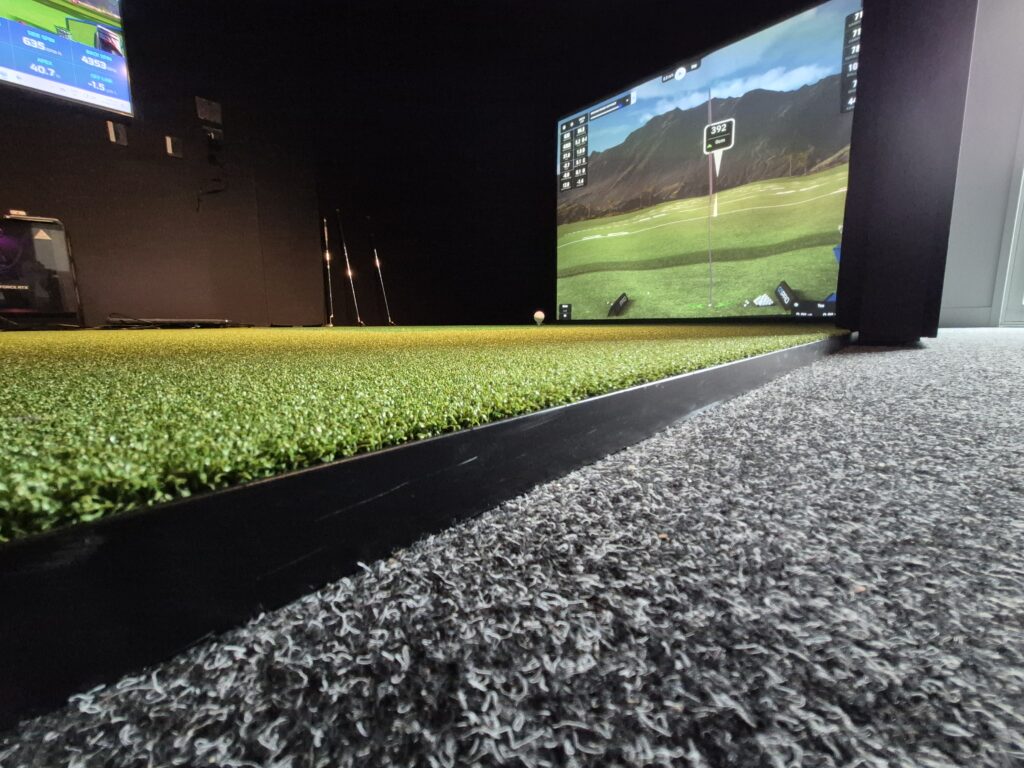
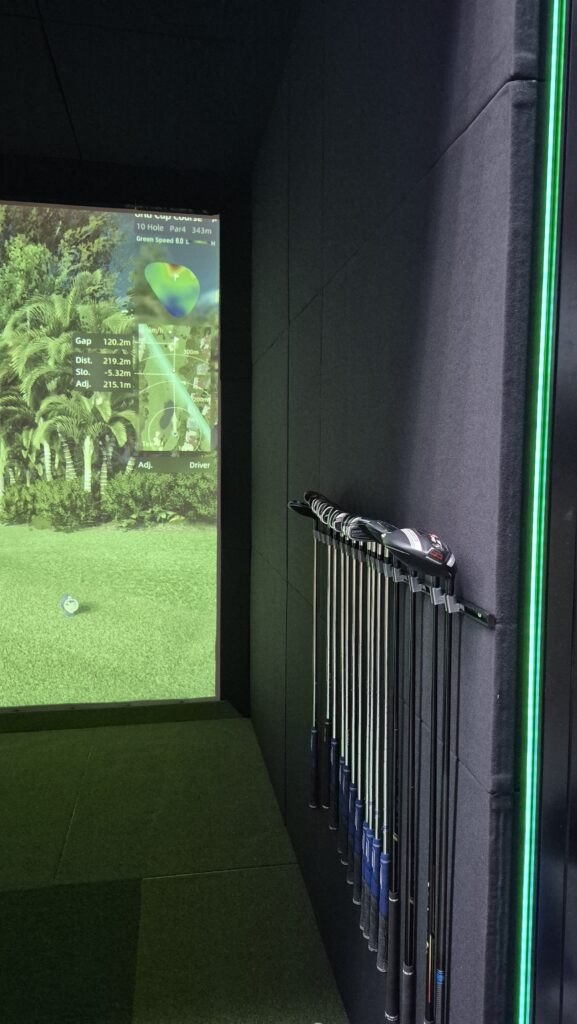
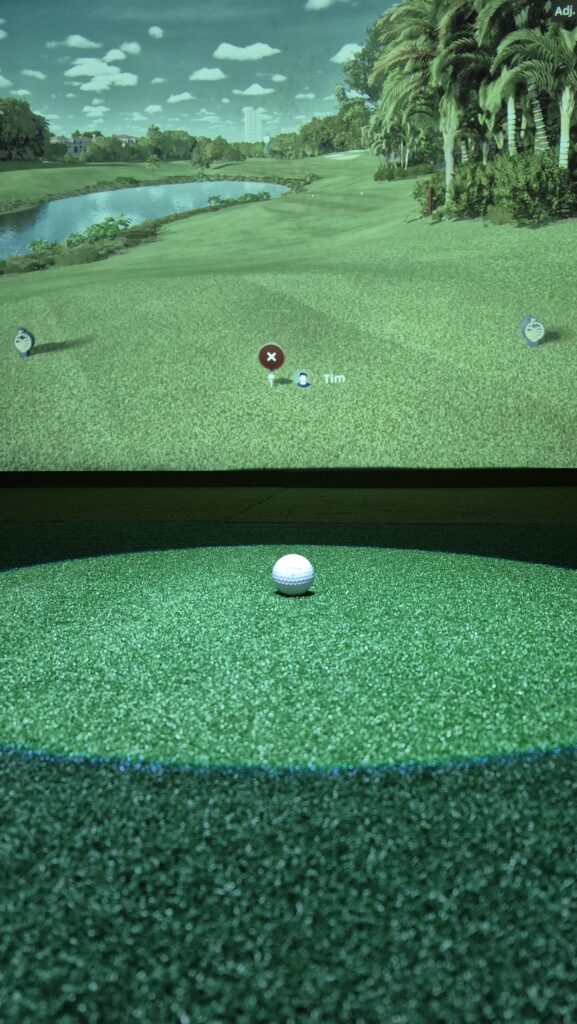
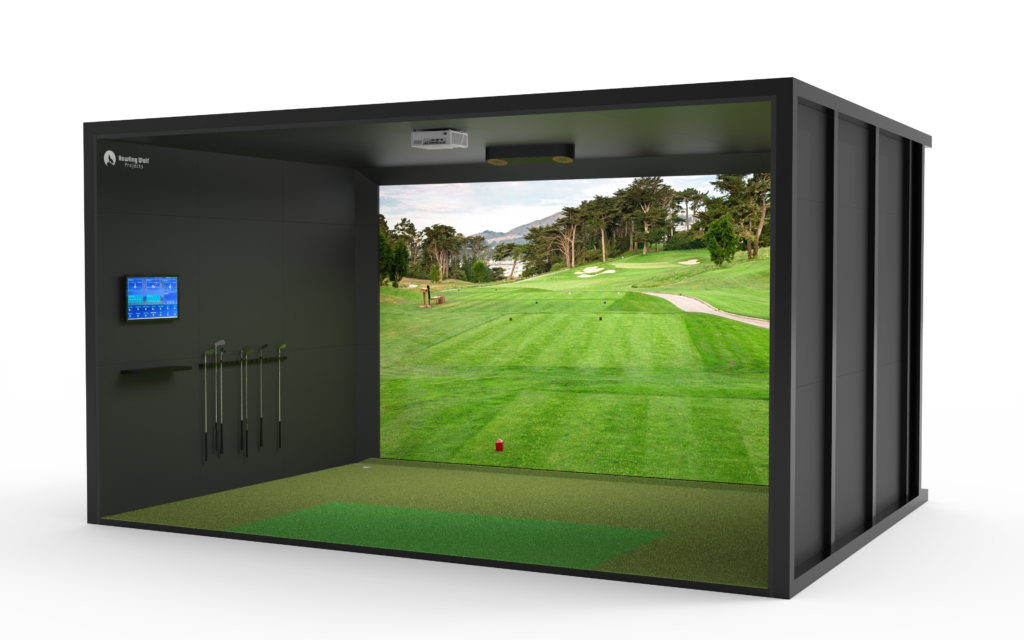
That curiosity led to a polished, high-end product. Tim has developed many of the key components; custom multi-layer acoustic panels, an innovative aluminium framing system, full putting turf and realistic hit mats, projector screens made from impact absorbing spacer fabric, the same spongy material found in quality sports shoes. Add a launch monitor, a projector, and powerful PC running software that lets players tee off on courses like Augusta, Pebble Beach, and Te Arai Links, and you have a fully immersive virtual golf experience.
While competitors typically use basic enclosures, either timber frames with thin foam facing or flimsy tent pole & canvas construction, his pergola framing system & 35mm thick acoustic panels offer superior sound absorption and a noticeably cleaner finish. The panel connections are invisible from the front. The build quality shows.
The golf landscape is shifting, both globally and here in New Zealand. The next wave of play is becoming more technology‑driven, more accessible, and far more social. In this evolving market, Tim sees plenty of room for a product that simply does it better.